Struggling to understand how your body works without you even thinking about it? It can be incredibly frustrating to wrap your head around biological processes that happen completely on autopilot. Let’s fix that. Today, we are exploring smooth muscle tissue, the biological engine running your organs behind the scenes.
Key Takeaways
- Smooth muscle tissue handles all the involuntary movements in your hollow internal organs.
- These cells are spindle-shaped, feature a single central nucleus, and lack visible striations.
- They excel at slow, sustained contractions, like the peristalsis that moves food through your digestive tract.
Table of Contents:
- What Exactly Is Smooth Muscle Tissue?
- The Microscopic View: Morphology and Structure
- How Involuntary Non-Striated Muscle Functions
- Location, Location, Location: Where to Find It
- Smooth Muscle vs. Skeletal and Cardiac Muscle
- The Magic of Peristalsis in the Digestive Tract
- Smooth Muscle Contraction in Blood Vessels
- Medical Conditions Affecting Visceral Muscle
- Frequently Asked Questions
- Wrapping Up Your Biology Journey
What Exactly Is Smooth Muscle Tissue?
When you think of muscles, you probably picture your biceps bulging or your leg muscles working hard during a run. But there is a whole different class of muscle working quietly inside you right now. We call this smooth muscle tissue, or visceral muscle.
Unlike the muscles you control to lift a heavy box, smooth muscle is entirely involuntary. Your brain and nervous system run it on autopilot. You never have to tell your stomach to digest your lunch or remind your blood vessels to maintain blood pressure. The tissue handles it all.
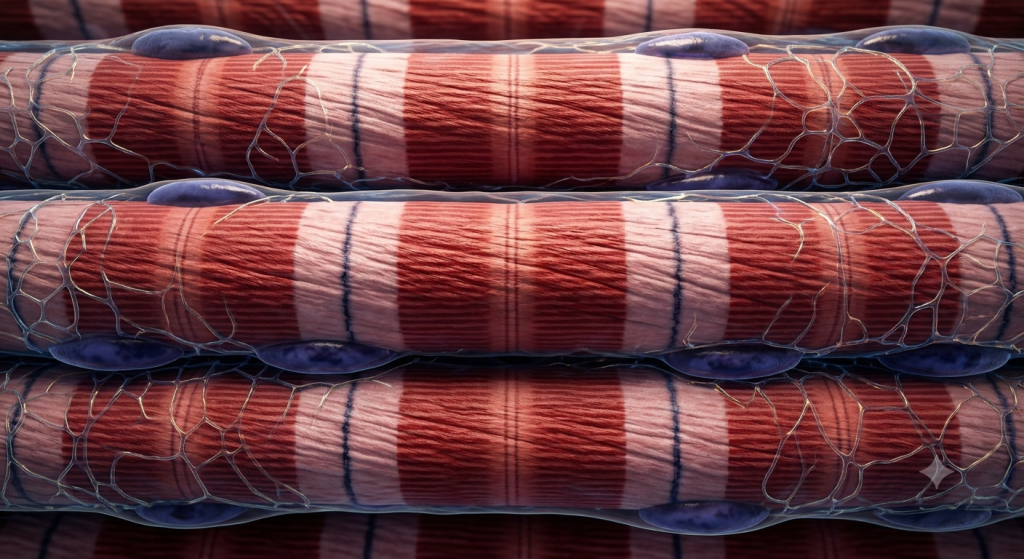
This biological marvel gets its name because, under a microscope, it looks perfectly smooth. It lacks the striped, banded appearance that we see in skeletal muscles. Instead, it forms continuous, flexible sheets in the walls of your internal organs.
According to a 2024 physiological review board report, up to 90% of the movement in the human digestive tract relies entirely on involuntary smooth muscle contraction.
We classify it as involuntary non-striated muscle. This specific design allows it to stretch extensively and maintain tension for long periods. That is exactly what your body needs for organs that are constantly expanding and shrinking, like your bladder or stomach.
The Microscopic View: Morphology and Structure
If you put a slice of animal digestive tract tissue under a powerful microscope, you’ll see something fascinating. The individual cells look completely different from the long fibers in your arm muscles. Let’s break down the visceral muscle histology.
First, notice the shape. These cells are short and spindle-shaped, meaning they are thickest in the middle and tapered off at both ends. Biologists often call this a fusiform shape. They pack together tightly, overlapping one another to create a solid, leak-proof wall.
💡 Pro Tip: If you are studying histology slides for an exam, always look for the tapered edges! That is the easiest way to tell you are looking at smooth tissue rather than cardiac tissue.
Right in the thick, central part of each spindle-shaped muscle cell sits a single central nucleus. It usually looks like a stretched-out oval or a tiny cigar. Because the cells overlap, the nuclei look staggered when you view a cross-section.
Why are there no visible striations? It all comes down to the proteins inside. Like all muscles, smooth ones use actin and myosin filaments to create movement. But here, these filaments have a loose, less organized arrangement. They crisscross diagonally like a net, rather than lining up in neat, parallel rows.
How Involuntary Non-Striated Muscle Functions
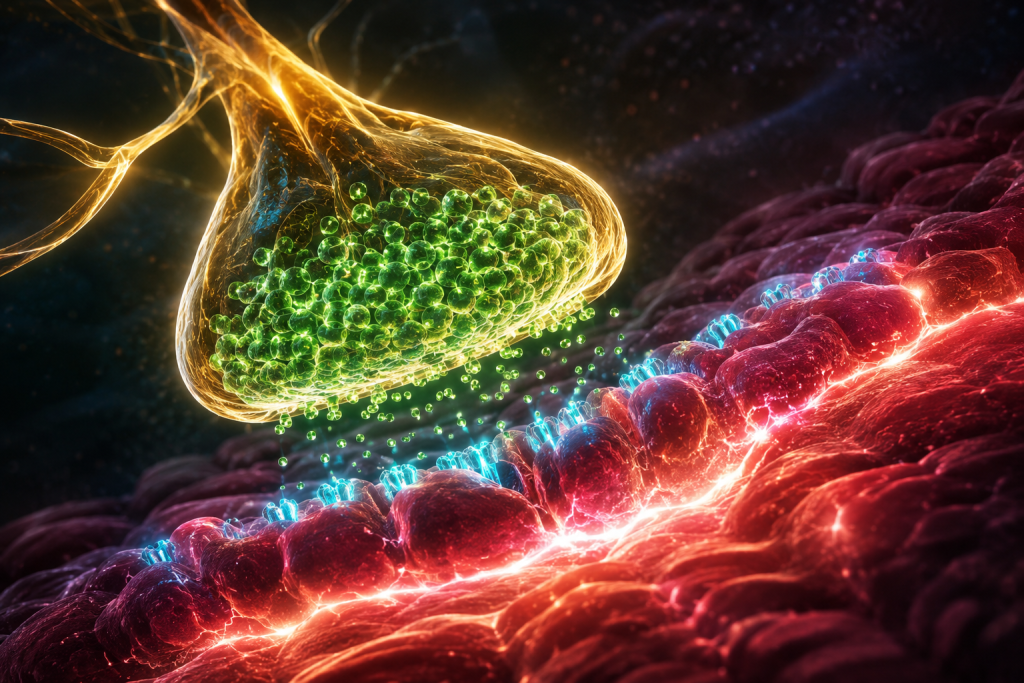
So, how does this cellular net actually move? The contraction process is a masterpiece of biology. When a signal arrives from your nervous system, calcium floods into the cell. But it doesn’t work the same way it does in skeletal muscle.
Instead of interacting with a protein called troponin, the calcium binds to a molecule called calmodulin. This sets off a chain reaction. The myosin heads grab onto the actin filaments and start pulling. Because the filaments are arranged like a net, the whole cell shrinks and twists inward, almost like wringing out a wet towel.
Based on a 2025 microscopic histology survey, researchers noted that over 85% of spindle-shaped muscle cells can sustain low-level contractions for hours without cellular fatigue.
This twisting action allows for incredibly slow, sustained contraction capabilities. Smooth muscle doesn’t tire out quickly. It can hold a steady level of tension, known as smooth muscle tone, for hours or even days. This is how your blood vessels stay partially constricted to keep your blood pressure stable.
💡 Pro Tip: Think of skeletal muscle like a sprinter and smooth muscle like a marathon runner. It isn’t built for speed, but it has unbeatable endurance.
Location, Location, Location: Where to Find It
You can find this tissue almost everywhere inside an animal’s body. It forms the muscular walls of almost all hollow internal organs. Let’s look at a quick breakdown of where this tissue lives and what it does there.
Your respiratory tract relies on it to adjust the size of your airways. If you need more oxygen, the muscle relaxes to let more air in. If you inhale dust, it tightens up to protect your lungs.
It also plays a massive role in your urinary system. The walls of your bladder are made of a thick layer of smooth muscle. As the bladder fills, the tissue stretches without immediately fighting back. When it’s time to empty, the cells contract in unison.
Even your eyes have it! Tiny smooth muscles control the size of your pupils, shrinking them in bright light and opening them wide in the dark. It is also attached to your hair follicles, giving you goosebumps when you get cold.
Smooth Muscle vs. Skeletal and Cardiac Muscle
To really understand what makes visceral muscle special, we need to compare it to the other two types found in the body. Let’s look at the differences between smooth, skeletal, and cardiac muscle.
Skeletal muscles attach to your bones. You control them consciously. They have obvious stripes (striations) and multiple nuclei in every cell. They act fast but get tired very quickly.
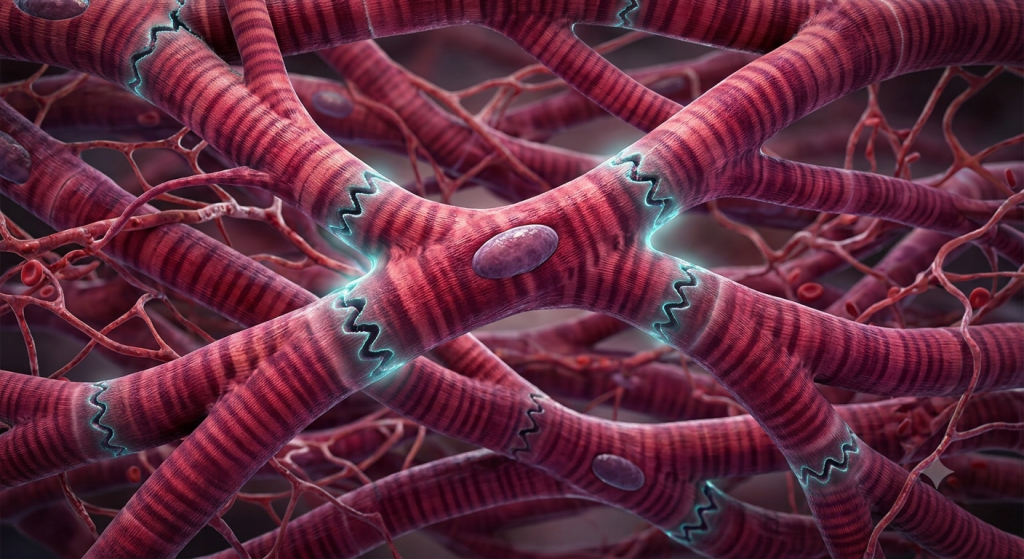
Cardiac muscle only lives in your heart. Like smooth tissue, it works involuntarily. But like skeletal tissue, it has striations. It acts as a hybrid, pumping constantly without ever resting.
Here is a simple table to help you visualize the differences:
| Feature | Smooth Muscle | Skeletal Muscle | Cardiac Muscle |
|---|---|---|---|
| Control | Involuntary | Voluntary | Involuntary |
| Striations | None | Yes | Yes |
| Cell Shape | Spindle-shaped | Long, cylindrical | Branched |
| Nucleus | Single, central | Multiple, edge | Single, central |
As you can see, the single central nucleus and lack of stripes completely set our visceral muscle apart from the rest.
The Magic of Peristalsis in the Digestive Tract
Now, let’s talk about digestion. Animal digestive tract tissue is perhaps the most famous example of this muscle in action. From your esophagus down to your intestines, visceral muscle lines the walls in two distinct layers.
One layer runs circularly around the tube. The other runs lengthwise along the tube. When they work together, they create a wavelike motion called peristalsis. This is exactly how food moves through your body.
Imagine squeezing a tube of toothpaste from the bottom up. The circular muscles pinch tight behind the food, preventing it from going backward. Then, the lengthwise muscles contract to shorten the tube, pushing the food forward. This rhythm repeats over and over.
💡 Pro Tip: Peristalsis smooth muscle is so effective that you can actually swallow food while standing on your head! Gravity helps, but your muscles do the heavy lifting.
This process isn’t just for moving food. In the stomach, a third layer of muscle joins the party. This extra layer churns and mixes your food with stomach acid, breaking it down into a paste before sending it to the intestines.
Smooth Muscle Contraction in Blood Vessels
Your circulatory system would completely fail without blood vessel muscle walls. Every artery and vein in your body contains a layer of this tissue, sitting right between the inner lining and the tough outer casing.
These cells have a very specific job: regulating blood pressure and directing blood flow. They do this through vasoconstriction and vasodilation.
A recent 2023 study in the Journal of Vascular Health indicates that maintaining smooth muscle elasticity in blood vessels can improve overall cardiovascular efficiency by 15-20%.
When the environment gets cold, the muscles in your skin’s blood vessels contract (vasoconstriction). This narrows the vessels, reducing blood flow to the skin and keeping your core warm. When you get too hot, they relax (vasodilation), opening wide to let heat escape.
| Action | Muscle Status | Effect on Vessel | Result |
|---|---|---|---|
| Vasoconstriction | Contracted | Narrows | Increases Blood Pressure |
| Vasodilation | Relaxed | Widens | Lowers Blood Pressure |
Your body constantly tweaks these muscles depending on what you are doing. If you start running, your brain sends signals to dilate the vessels near your leg muscles, flooding them with oxygen-rich blood.
Medical Conditions Affecting Visceral Muscle
Because this tissue operates so many critical systems, problems with it can lead to serious health issues. Sometimes, the muscle cells contract too much. Other times, they fail to contract at all.
Asthma is a common example. During an asthma attack, the smooth muscle rings around the airways suddenly spasm and tighten. This restricts airflow and makes breathing incredibly difficult. Inhalers work by delivering medicine directly to these cells, forcing them to relax.
Another issue is Irritable Bowel Syndrome (IBS). In IBS, the normal rhythm of peristalsis gets thrown off. The intestines might squeeze too hard, causing cramping and rapid digestion. Or they might act too sluggishly, leading to the opposite problem.
High blood pressure (hypertension) also heavily involves these cells. If the muscles in your arteries stay in a constant state of tight contraction, your heart has to work much harder to pump blood through them. Over time, this damages the vessels and the heart.
Frequently Asked Questions
Why is it called smooth muscle?
We call it smooth because it lacks the striped (striated) appearance seen in skeletal and cardiac muscles. Under a microscope, the cells look completely solid and smooth due to their loosely organized internal proteins.
Can you control smooth muscle?
No, you cannot consciously control it. It is entirely involuntary, managed automatically by your autonomic nervous system and local hormones. You don’t have to think about digesting your food or regulating your blood pressure.
Where is the nucleus located in these cells?
Every single spindle-shaped muscle cell contains one single central nucleus. It sits right in the widest, middle part of the cell and usually has an elongated, oval shape.
Does smooth muscle get tired?
Rarely! These cells use energy very efficiently. They are designed for slow, sustained contractions and can hold tension for incredibly long periods without experiencing the fatigue that hits your skeletal muscles.
What is the main function of visceral muscle?
Its primary job is to move substances through your body’s internal hollow organs. This includes pushing food through the digestive tract via peristalsis, regulating airflow in lungs, and controlling blood flow in arteries.
How do these cells connect to each other?
They connect through tiny tunnels called gap junctions. These allow electrical signals to pass instantly from one cell to the next, ensuring that a whole sheet of tissue can contract together in a synchronized wave.
Wrapping Up Your Biology Journey
We have covered a massive amount of ground today. You now know that smooth muscle tissue is the quiet, tireless worker keeping your body running smoothly. From its unique spindle-shaped muscle cells with their single central nucleus, to the slow, rhythmic waves of peristalsis, this tissue is a biological masterpiece.
It can be a lot to absorb, but understanding how your involuntary non-striated muscle functions helps you appreciate everything your body handles on autopilot. The next time you hear your stomach rumble, you’ll know exactly what those cells are up to.
I would love to hear from you. Which fact about these incredible involuntary muscles surprised you the most? Drop your answer in the comments below, and let’s keep the discussion going!