It can be incredibly frustrating when a brutal workout leaves your body too sore to move, or worse, when a major injury permanently limits your mobility. You might find yourself wondering why some parts of your body bounce back perfectly while others simply cannot heal. We are going to solve that biological mystery today. We will break down the exact science of muscle tissue regeneration, showing you how your body repairs damage at a microscopic level.
Key Takeaways
- Skeletal muscle relies on specialized satellite cells to repair daily wear and tear, growing larger through hypertrophy rather than multiplying.
- Cardiac muscle completely lacks meaningful regenerative ability, replacing damaged heart tissue with permanent, non-functional fibrous scars.
- Smooth muscle is the ultimate healer in the human body, capable of both expanding in size and multiplying in number to repair extensive tissue damage.
Table of Contents
- The Biology of Damage: Why Muscles Need Repair
- Skeletal Muscle Repair: The Power of Satellite Cells
- Hypertrophy vs. Hyperplasia: The Growth Debate
- Cardiac Muscle: The Heart’s Inability to Heal
- Smooth Muscle Regeneration: The Healing Champion
- Comparing the Three Muscle Tissue Types
- Animal Muscle Growth and Zoological Healing
- Key Factors Influencing Muscle Recovery
- Frequently Asked Questions
- Wrapping Up Your Cellular Journey
The Biology of Damage: Why Muscles Need Repair
Your muscles are constantly under siege. Every time you lift a heavy box, sprint for a bus, or even just maintain your posture, you create microscopic tears in your muscle fibers. This is a completely normal part of human existence. However, the body must have a system to fix these micro-tears before they compound into massive structural failures.
Muscle tissue regeneration is the biological process where damaged, diseased, or dead muscle cells are replaced or repaired. The end goal is to restore normal function and prevent weakness. But here is the catch: not all muscles are created equal. The human body contains three distinct types of muscle tissue, and each handles damage in wildly different ways.
If you slice your finger, your skin cells divide rapidly to close the wound. Muscle cells, for the most part, do not behave like skin cells. Many muscle cells are post-mitotic. That means once they mature, they permanently lose the ability to divide and multiply. This severe limitation forces the body to rely on backup systems, specialized stem cells, and sometimes, desperate patching methods to keep you moving.
Skeletal Muscle Repair: The Power of Satellite Cells
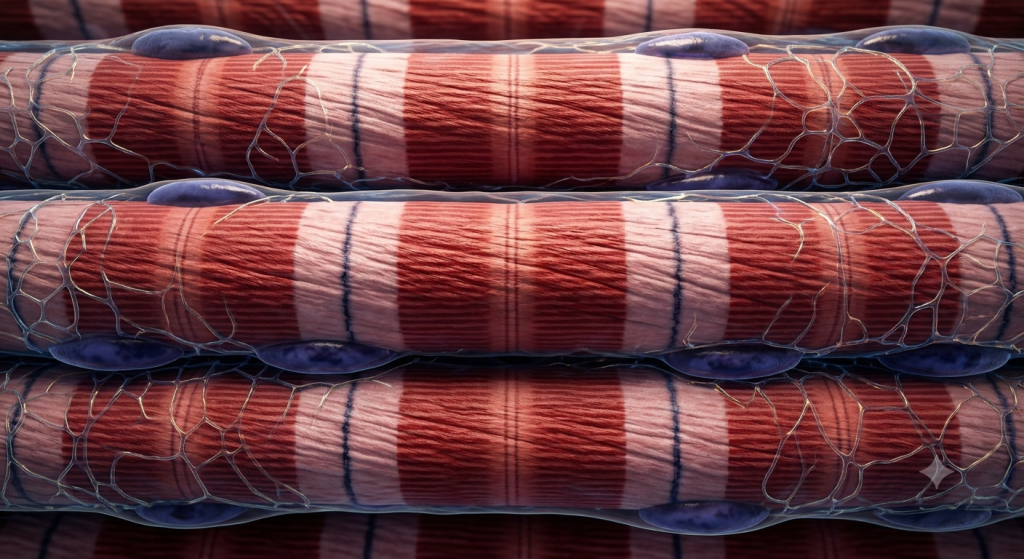
Skeletal muscle makes up about 40% of your total body weight. It is the tissue responsible for all voluntary movement. Because we use it so intensely, it takes a lot of damage. Thankfully, skeletal muscle has a fascinating, highly effective repair mechanism built right in.
The secret weapon of skeletal muscle repair is the satellite cell. Discovered by biophysicist Alexander Mauro in 1961, these are tiny, unspecialized stem cells that live a dormant life. They sit quietly wedged between the muscle fiber’s outer membrane (the sarcolemma) and the surrounding basement membrane. Most of the time, they do absolutely nothing.
The Four Steps of Cellular Repair
When you experience skeletal muscle damage, a complex alarm system goes off in your body. This triggers a four-step regeneration process.
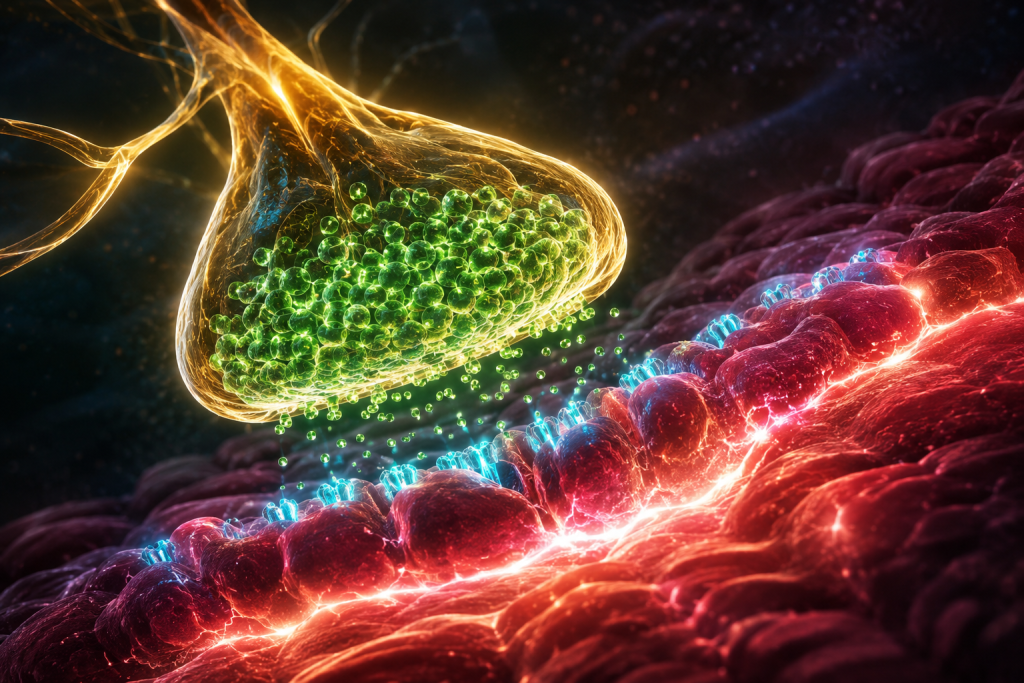
1. Activation: First, the damaged muscle fibers release chemical signals into the surrounding tissue. Inflammatory cells, like macrophages, rush to the site to clean up dead cellular debris. This inflammation wakes up the sleeping satellite cells, pulling them out of their dormant state.
2. Proliferation: Once awake, the satellite cells begin to rapidly divide. They create a small army of new, immature muscle cells called myoblasts. This multiplication phase ensures there is enough raw material to fix the microscopic tears.
3. Differentiation: The newly formed myoblasts stop dividing and start transforming. They begin to express specific muscle proteins, preparing themselves to become fully functional adult muscle tissue.
4. Fusion: Finally, these mature myoblasts fuse directly into the existing, damaged muscle fiber. By donating their nuclei and cellular machinery, they patch the tear and make the original fiber thicker and stronger.
According to a 2023 physiological research report, healthy young adults can mobilize millions of satellite cells within 24 hours of intense resistance training, accelerating localized tissue repair by up to 300%.
💡 Pro Tip: You can actively boost satellite cell activation by consuming high-quality protein immediately after a workout. The amino acid leucine acts as a massive biological trigger for this repair sequence.
Hypertrophy vs. Hyperplasia: The Growth Debate
When you hit the gym and lift weights, your muscles get bigger. Most people assume that they are building entirely new muscle cells. Let’s be honest, that sounds logical. However, biology tells a very different story regarding human muscle growth.
We need to distinguish between two highly specific biological terms: hypertrophy and hyperplasia. Understanding the difference between these two concepts is essential for mastering muscle histology.
What is Hypertrophy?
Hypertrophy is the increase in the actual size and volume of an existing cell. When it comes to skeletal muscle, this is how you grow. When satellite cells fuse with a damaged fiber, they add their internal components to that fiber. The cell packs in more contractile proteins (actin and myosin).
As a result, the individual muscle fiber physically swells and thickens. Your body is not creating new fibers; it is just making the ones you already have much larger and significantly stronger. This is the primary driver of muscle growth in adult humans.
What is Hyperplasia?
Hyperplasia, on the other hand, is an increase in the total number of cells. This means one cell divides to become two, two become four, and so on. In adult human skeletal muscle, hyperplasia is incredibly rare, if it happens at all.
While some animal studies suggest extreme stretching might induce a tiny bit of skeletal muscle hyperplasia, the overwhelming consensus in human physiology is that we grow strictly through hypertrophy. You are born with roughly the number of muscle fibers you will have for life. You simply inflate them through exercise.
| Growth Mechanism | Definition | Common in Human Skeletal Muscle? |
|---|---|---|
| Hypertrophy | Increase in existing cell size | Yes, the primary method of growth |
| Hyperplasia | Increase in total cell number | No, virtually non-existent in adults |
Cardiac Muscle: The Heart’s Inability to Heal
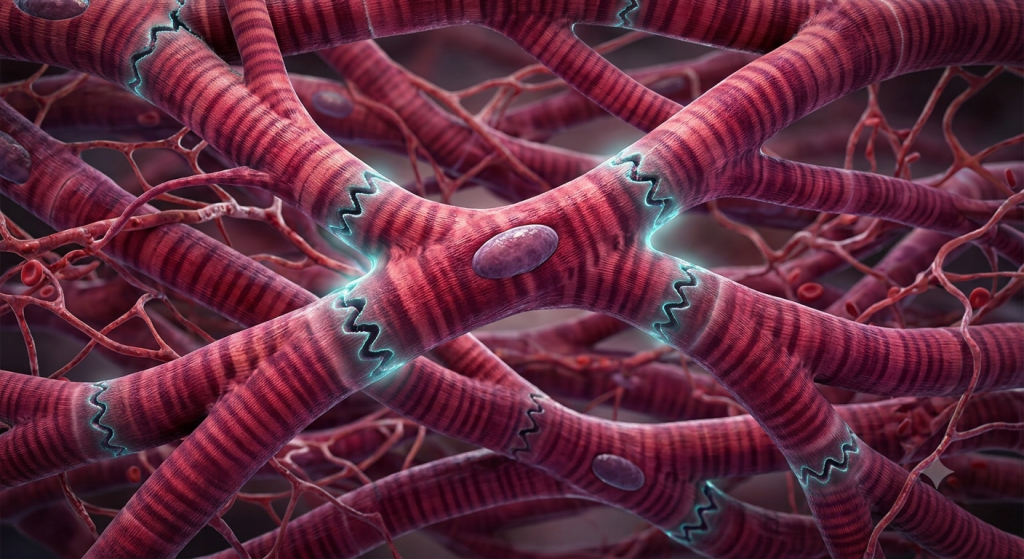
We just saw how efficiently skeletal muscle repairs itself. Now, we must look at the tragic flaw of the human heart. Cardiac muscle tissue (the myocardium) is arguably the hardest working tissue in the body. It beats roughly 100,000 times a day without rest. Yet, it has a terrible secret.
Cardiac muscle has almost zero capacity for regeneration. Unlike skeletal muscle, the heart contains very few, if any, functional satellite cells. The cardiomyocytes (heart muscle cells) are strictly post-mitotic. They cannot divide, and they cannot replace themselves if they die.
The Reality of a Myocardial Infarction
When a blood clot blocks an artery feeding the heart, the cardiac muscle tissue rapidly runs out of oxygen. This event is a myocardial infarction, commonly known as a heart attack. Without oxygen, the cardiomyocytes begin to die within mere minutes.
Because the heart cannot grow new muscle cells to replace the dead ones, it relies on an emergency patching system. Special connective tissue cells called fibroblasts rush to the area of cell death. They begin aggressively laying down tough, rigid collagen fibers.
The Consequence of Scar Tissue
This collagen patch forms a permanent scar. While the scar prevents the heart wall from rupturing entirely, it comes with severe biological penalties. Fibrous connective tissue cannot contract. It is dead weight that the rest of the surviving heart muscle must pull against.
On top of that, scar tissue cannot conduct electrical signals. A healthy heart beats in a perfect, synchronized rhythm thanks to electrical pathways. A scar acts like a roadblock, disrupting this electrical flow. This is why heart attack survivors frequently suffer from dangerous, irregular heartbeats known as arrhythmias.
A 2024 cardiovascular study highlighted that replacing just 15% of healthy left ventricular muscle with fibrous scar tissue increases the risk of chronic heart failure by nearly fourfold.
💡 Pro Tip: Because the heart cannot regenerate, preventative maintenance is your only defense. Managing blood pressure and avoiding plaque buildup in your arteries is biologically non-negotiable for long-term survival.
Smooth Muscle Regeneration: The Healing Champion
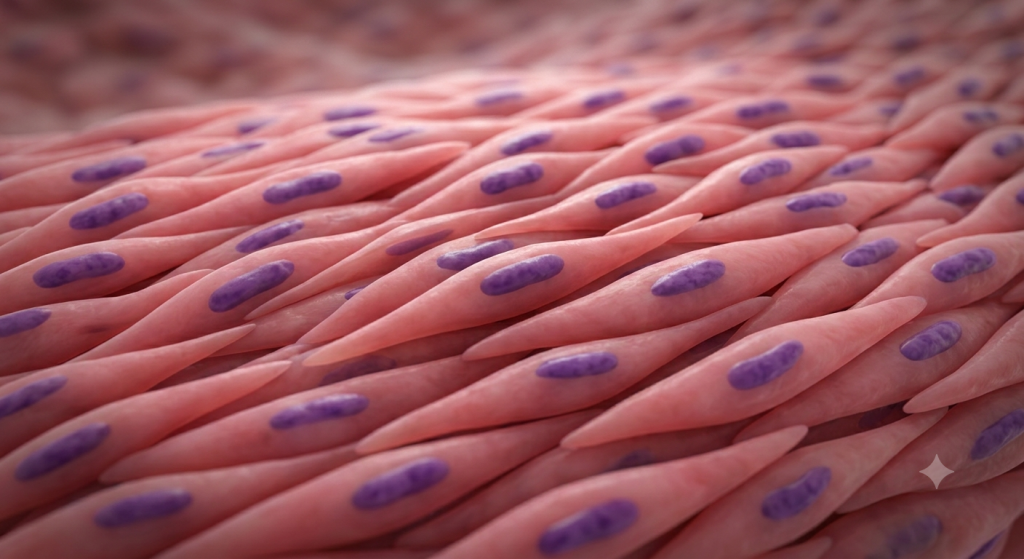
We often ignore smooth muscle. It doesn’t give us large biceps, and it doesn’t beat rhythmically in our chests. Smooth muscle lines the walls of our hollow organs, blood vessels, respiratory tracts, and digestive systems. It operates completely involuntarily, moving food along and regulating blood pressure.
Despite being out of the spotlight, smooth muscle is the undisputed champion of tissue regeneration. When it comes to repairing damage, smooth muscle leaves both skeletal and cardiac tissue in the dust. It retains an incredible amount of cellular flexibility throughout your entire life.
The Power to Divide
Unlike heart or skeletal cells, many smooth muscle cells retain the ability to undergo mitosis. If a section of your intestinal wall is damaged, the surviving smooth muscle cells can actively divide to replace the lost tissue. This is true hyperplasia in action.
In addition to dividing themselves, smooth muscle tissues also utilize specialized stem cells called pericytes. These pericytes wrap around small blood vessels. When nearby smooth muscle is injured, pericytes can detach, migrate to the injury site, and transform into brand new smooth muscle cells to complete the repair.
The Uterus: A Miracle of Growth
The most spectacular example of smooth muscle capability happens during pregnancy. The wall of the uterus is a thick layer of smooth muscle called the myometrium. Before pregnancy, the uterus is roughly the size of a small pear.
As a fetus grows, the uterus must expand massively. The smooth muscle achieves this through a dual attack. First, the existing cells undergo massive hypertrophy, growing incredibly long and thick. Second, they undergo rapid hyperplasia, multiplying in number to build a larger organ structure. After childbirth, the tissue seamlessly remodels back to its original size.
Comparing the Three Muscle Tissue Types
To truly master muscle histology, you must be able to contrast the regenerative capacities of the three types instantly. The differences dictate how medical professionals approach treating injuries in different parts of the body.
Skeletal muscle sits in the middle of the pack. It can repair itself reasonably well from moderate trauma, but it cannot replace massive amounts of lost tissue. It relies entirely on outside helpers (satellite cells) to get the job done. If a trauma destroys the satellite cells too, the skeletal muscle will scar.
Cardiac muscle is the worst performer. It operates on a ‘one-strike’ policy. Any significant loss of cardiomyocytes is permanent. The body chooses structural integrity (a rigid scar) over functional recovery because the heart cannot stop beating long enough to attempt a complex repair.
Smooth muscle takes the gold medal. It doesn’t just patch injuries; it completely replaces lost tissue with identical, fully functional new tissue. It can adjust its mass up or down depending on the environmental demands placed upon the organ.
| Muscle Type | Regenerative Capacity | Primary Repair Mechanism | Can it Undergo Hyperplasia? |
|---|---|---|---|
| Smooth Muscle | High | Cellular Mitosis & Pericytes | Yes, readily |
| Skeletal Muscle | Moderate | Satellite Cell Fusion | No, primarily hypertrophy |
| Cardiac Muscle | Virtually None | Fibrous Scar Tissue Formation | No |
Animal Muscle Growth and Zoological Healing
Human healing limitations look particularly embarrassing when we look at the broader animal kingdom. Zoological heart morphology and animal muscle function reveal that massive tissue regeneration is biologically possible. We simply lost the ability during our evolutionary journey.
The Amphibian Advantage
Consider the axolotl, a unique type of salamander. If an axolotl loses an entire limb—bone, skin, nerve, and massive amounts of skeletal muscle—it simply grows a new one. It doesn’t form a stump of scar tissue.
The axolotl triggers its adult cells to regress backwards in time. The cells revert into a mass of immature stem cells called a blastema. These cells then re-differentiate, multiplying and forming brand new, perfectly aligned skeletal muscle fibers. They achieve perfect hyperplasia and complete morphological restoration.
Zebra Fish and Heart Regeneration
Even more staggering is the zebrafish. If a predator bites off 20% of a zebrafish’s heart, the fish does not die. Unlike humans, it does not form a massive fibrous scar. Instead, the surviving zebrafish cardiomyocytes near the injury site actively dismantle their contractile machinery.
They temporarily stop beating, divide rapidly to replace the missing tissue, and then rebuild their internal sarcomeres to resume pumping. Scientists study these animals intensely, hoping to unlock the genetic switches that suppress this kind of miraculous healing in human DNA.
Key Factors Influencing Muscle Recovery
While you cannot regrow a limb like a salamander, you can optimize your body’s natural regenerative limits. Skeletal muscle repair is highly sensitive to your environment and daily habits. Several critical factors dictate whether a damaged muscle heals quickly or remains inflamed and weak.
Age and Sarcopenia
As we age, our satellite cells become sluggish. They do not wake up as quickly in response to damage, and they do not multiply as efficiently. This age-related decline in regenerative capacity contributes heavily to sarcopenia, the natural loss of muscle mass in older adults.
Resistance training in old age is the best defense against this decline. Lifting weights actively forces the remaining satellite cells to stay alert and functional, preventing the muscle tissue from atrophying entirely.
Nutrition and Sleep Architecture
You cannot build a house without bricks. Similarly, your satellite cells cannot repair muscle tissue without amino acids. Consuming adequate dietary protein provides the literal building blocks required for hypertrophy. Without enough protein, the repair process stalls, leading to prolonged soreness and weakness.
A 2022 clinical nutrition survey demonstrated that athletes consuming 1.6 grams of protein per kilogram of body weight experienced a 40% reduction in muscle recovery time compared to those on a standard diet.
Furthermore, the physical repair process peaks while you are asleep. During deep, slow-wave sleep, your pituitary gland releases large pulses of Human Growth Hormone (HGH). This hormone orchestrates the cellular repair process. If you consistently shortchange your sleep, you cripple your body’s ability to heal damaged tissue effectively.
Frequently Asked Questions
Can a torn skeletal muscle heal on its own?
Yes, minor to moderate tears heal naturally through satellite cell activation. These cells fuse with damaged fibers to restore strength. However, complete, catastrophic ruptures often require surgical intervention to reattach the tissue before the repair process can begin.
Why does a heart attack cause permanent damage?
Cardiac muscle lacks active satellite cells and cannot undergo cellular division. When heart cells die from a lack of oxygen, the body hastily replaces them with non-contractile, non-conductive collagen scar tissue, permanently reducing the heart’s pumping efficiency.
Does weightlifting increase the number of muscle cells I have?
No, weightlifting does not increase your total number of muscle cells. Humans grow primarily through hypertrophy. The physical stress of lifting causes your existing muscle fibers to increase in volume and thickness, rather than multiplying.
Which type of muscle tissue heals the fastest?
Smooth muscle heals the fastest and most efficiently. Located in your blood vessels and organs, it retains a high capacity for mitosis. It can rapidly divide and replace lost cells, completely restoring normal tissue function without extensive scarring.
What role do macrophages play in muscle regeneration?
Macrophages are a type of white blood cell that acts as a cleanup crew. They rush to the injury site, consume dead tissue debris, and release vital chemical signals that awaken dormant satellite cells to begin the repair sequence.
Can I improve my body’s ability to repair muscle?
Yes. You can maximize your natural repair mechanisms by consuming sufficient high-quality protein, managing systemic inflammation, and prioritizing 7-9 hours of deep sleep per night to ensure optimal growth hormone release.
Wrapping Up Your Cellular Journey
You now hold a deep, structural understanding of muscle tissue regeneration. We have moved far beyond the basics, exploring exactly how satellite cells rescue damaged skeletal fibers and why the human heart is so incredibly vulnerable to scarring. You understand that when you build strength, you are inflating existing cells through hypertrophy, not creating new ones. You also know that the humble smooth muscle in your internal organs is the true champion of biological healing.
Understanding these cellular repair mechanisms allows you to make smarter choices about your training, nutrition, and overall health. We want to keep this conversation going. Considering the incredible regenerative powers of amphibians we discussed, do you think medical science will ever figure out a way to force human heart tissue to regenerate like a zebrafish? Drop your thoughts and theories in the comments section below!